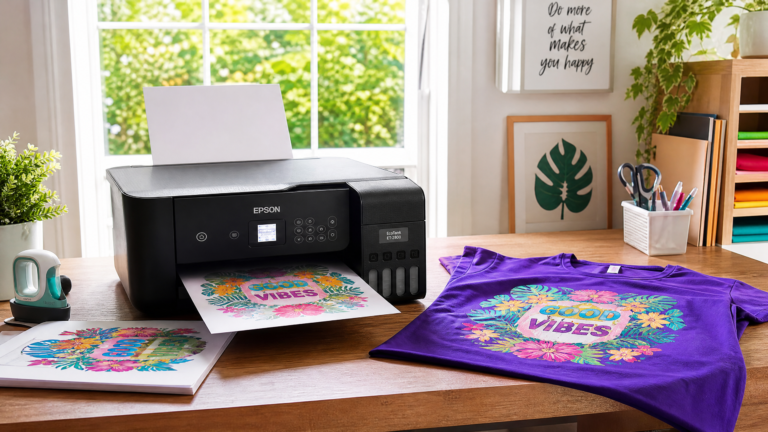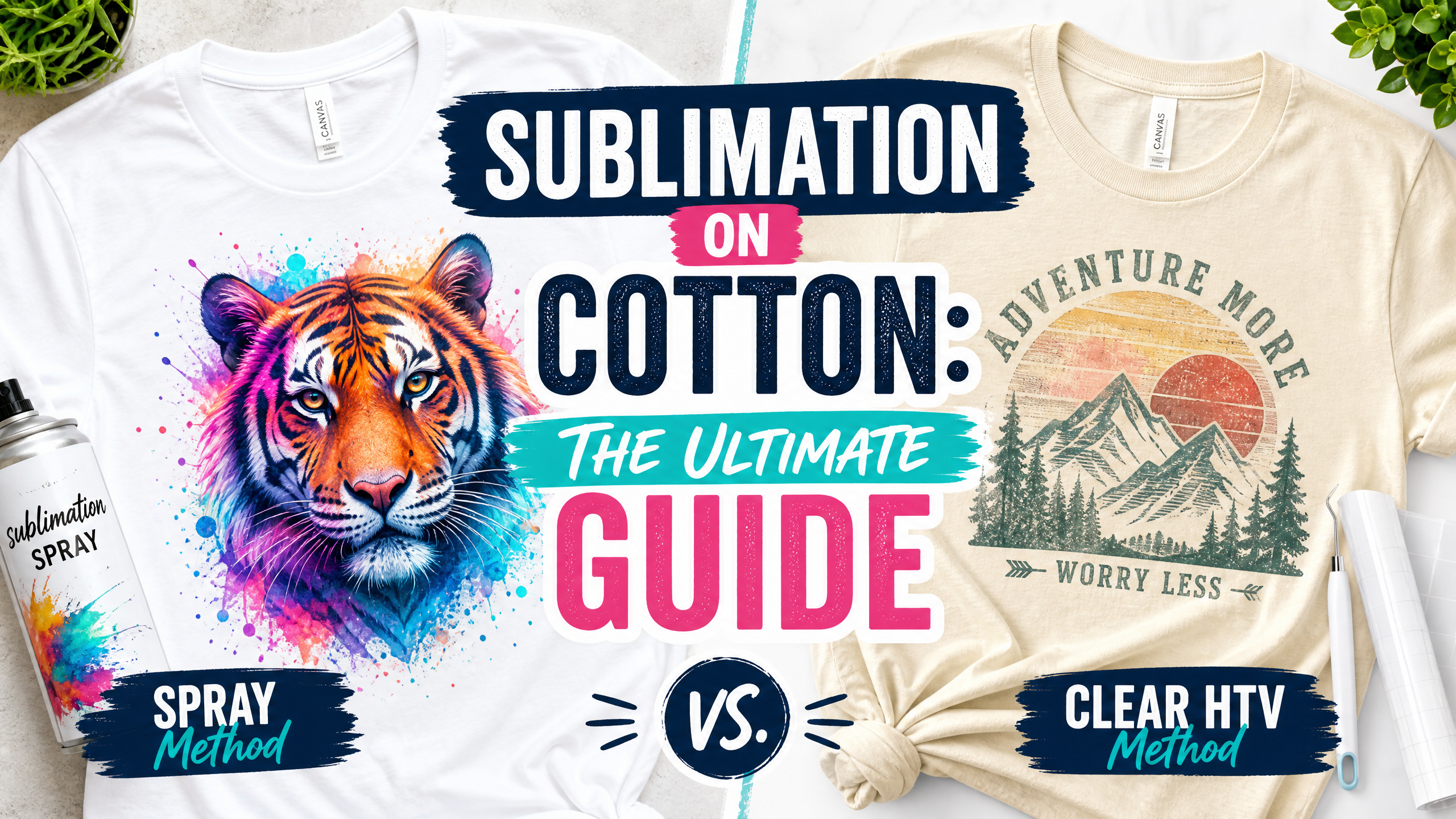
Sublimation on cotton is often seen as the holy grail in the custom apparel world. Imagine: the vibrant, permanent, zero-feel finish of sublimation combined with the breathable, soft comfort of your favorite cotton tee. Sounds perfect, right?
But if you’ve ever tried it, you know the harsh reality. You press a beautiful, vivid design onto a 100% cotton blank. It looks incredible. Then, you throw it in the wash, and it comes out looking like a faded, muddy disaster. We’ve all been there, ruining perfectly good shirts trying to cheat the system. The truth is, cotton breathes, and sublimation ink wants plastic.
To successfully achieve sublimation on cotton, you must create a bridge – a polymer layer for the ink to grab onto. Currently, the two most popular workarounds are sublimation sprays and clear Heat Transfer Vinyl (HTV). But which one actually survives the washing machine? Which one feels good enough to sell to a paying customer?
If you’re just starting out, you might also want to check out our comprehensive Sublimation for Beginners Guide to get the basics down before diving into these advanced workarounds.
We spent weeks stress-testing both methods with 20-wash cycles to bring you the definitive, no-BS answers. Here’s exactly what works, what fails, and what you should completely avoid when attempting sublimation on cotton.
The Science Behind the Struggle: Why Cotton Hates Sublimation Ink
Let’s get a little technical. Understanding why sublimation fails on cotton is the only way to truly understand how to fix it.
Sublimation is a chemical process. When your heat press reaches around 400°F, the solid ink on your transfer paper transforms directly into a gas. Simultaneously, this intense heat opens up the pores of polyester (a plastic-based polymer). The gaseous ink flows into these open pores. As the fabric cools, the pores close, permanently trapping the ink inside the polyester fibers.
Cotton, however, is a natural fiber. It has no polymers and no pores that react this way to heat. The sublimation gas simply sits on top of the cotton fibers. The moment soap and water hit it, that beautiful ink washes right down the drain. To bypass this, you have to coat the cotton with a faux-polyester layer, creating that essential polymer bridge for successful sublimation on cotton.
Method 1: Sublimation Sprays (The Chemical Bridge)
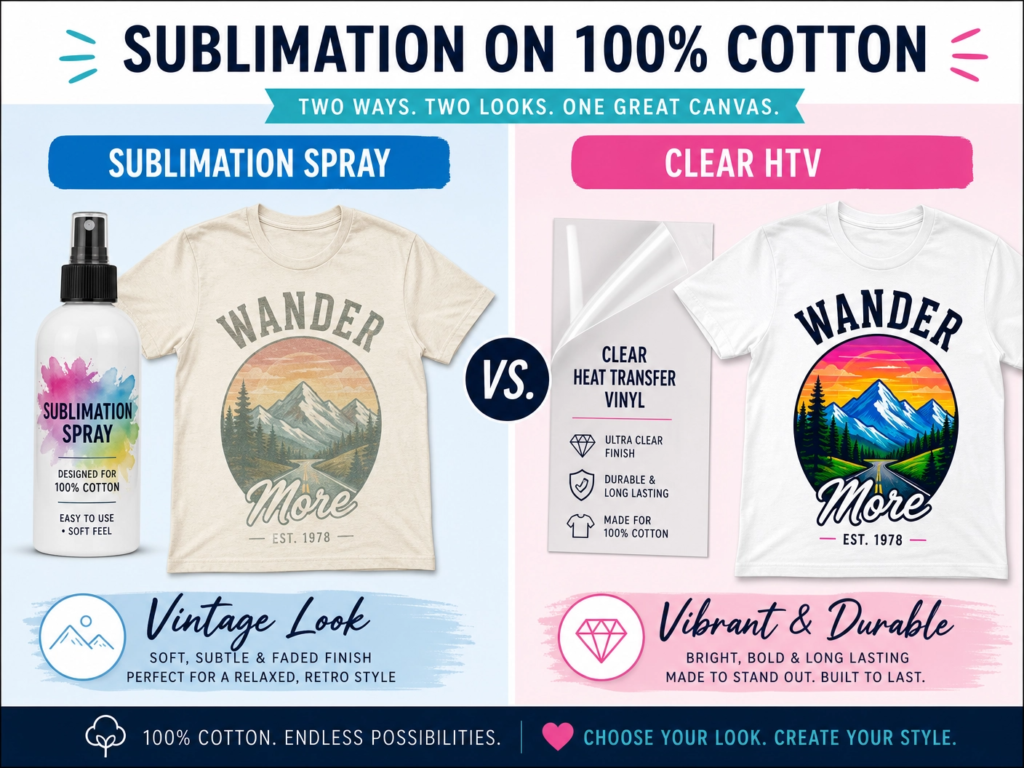
Sublimation sprays, often marketed as polymer coatings (like DyePress or Poly-T), are essentially liquid polymers. The idea is simple: you spray them onto your cotton fabric, let them dry, and then press your sublimation design directly into that chemical layer. Crafters are often drawn to sprays because, in theory, they leave no “hand” – that thick, plastic-y feeling on the shirt.
The Reality of Sublimation Sprays
In our extensive tests, sublimation sprays proved to be incredibly finicky. Achieving an even coat is a nightmare. Spray too lightly, and your image will look spotty and faded. Spray too heavily, and the shirt becomes stiff, losing the very comfort cotton is known for.
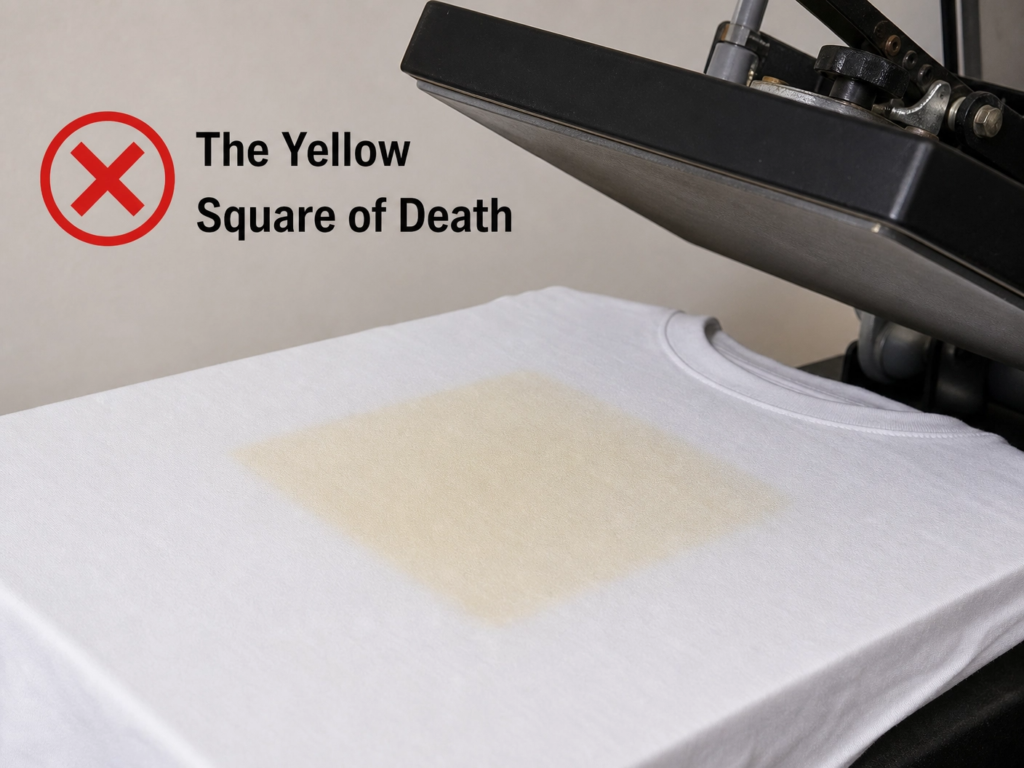
But the biggest headache? The dreaded “Yellow Box.” When you press a sprayed shirt at 400°F for 60 seconds, the heat often scorches the spray, leaving a faint, toasted yellow square exactly the size of your heat platen. While you can sometimes mitigate this with hydrogen peroxide, it’s an extra, time-consuming step that eats into your profit margins and adds unnecessary complexity to your sublimation on cotton process.
The 20-Wash Sublimation Spray Test Results
We applied a leading commercial sublimation spray to five 100% cotton white tees. After curing and pressing our designs, we subjected them to 20 standard warm-water wash and dry cycles. Here’s what we found:
•Wash 1-3: The shirts looked decent, with only a slight fade (around 10%). The initial stiffness from the spray washed out, leaving a softer feel.
•Wash 10: Noticeable degradation began. Blacks started turning a dark charcoal grey, and colors lost some vibrancy.
•Wash 20: The “vintage look” took over. The image was still present, but it resembled a band tee you’ve owned for five years – significantly faded and distressed.
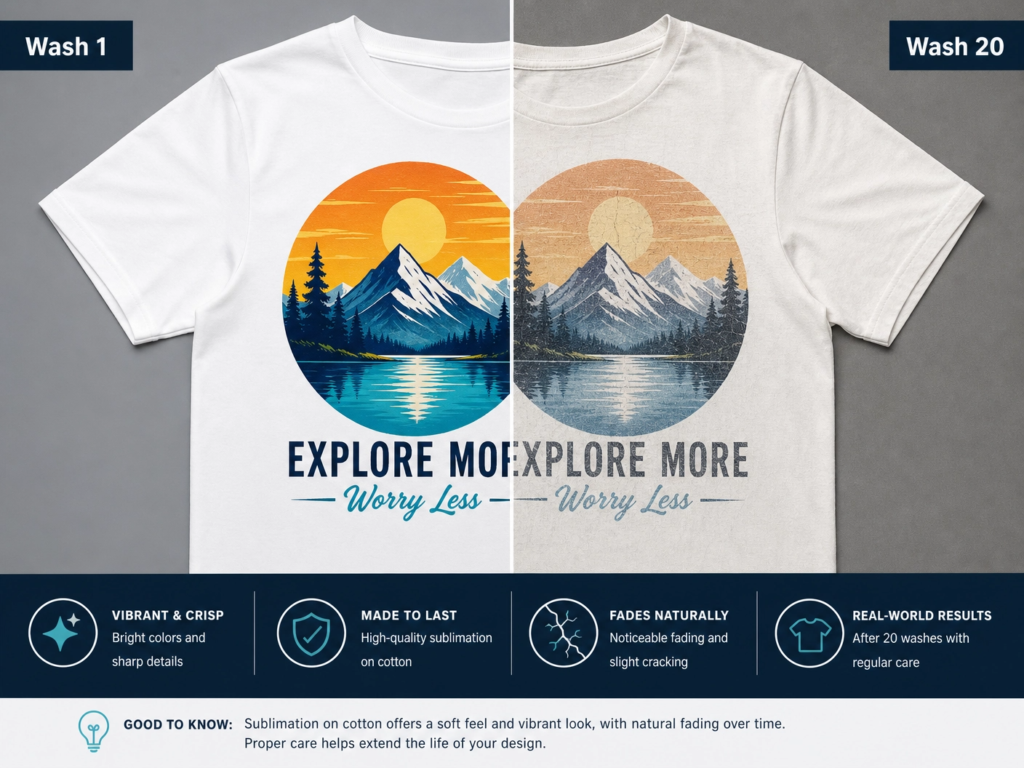
The Verdict on Sublimation Sprays: If you’re aiming for a distressed, retro, or vintage aesthetic for personal use or gifts, sprays can be fantastic. However, if you’re selling high-end, vibrant, photo-realistic shirts on Etsy, sublimation sprays will likely lead to one-star reviews and unhappy customers. They simply don’t offer the durability required for commercial sublimation on cotton.
Method 2: Clear HTV (The Physical Bridge)
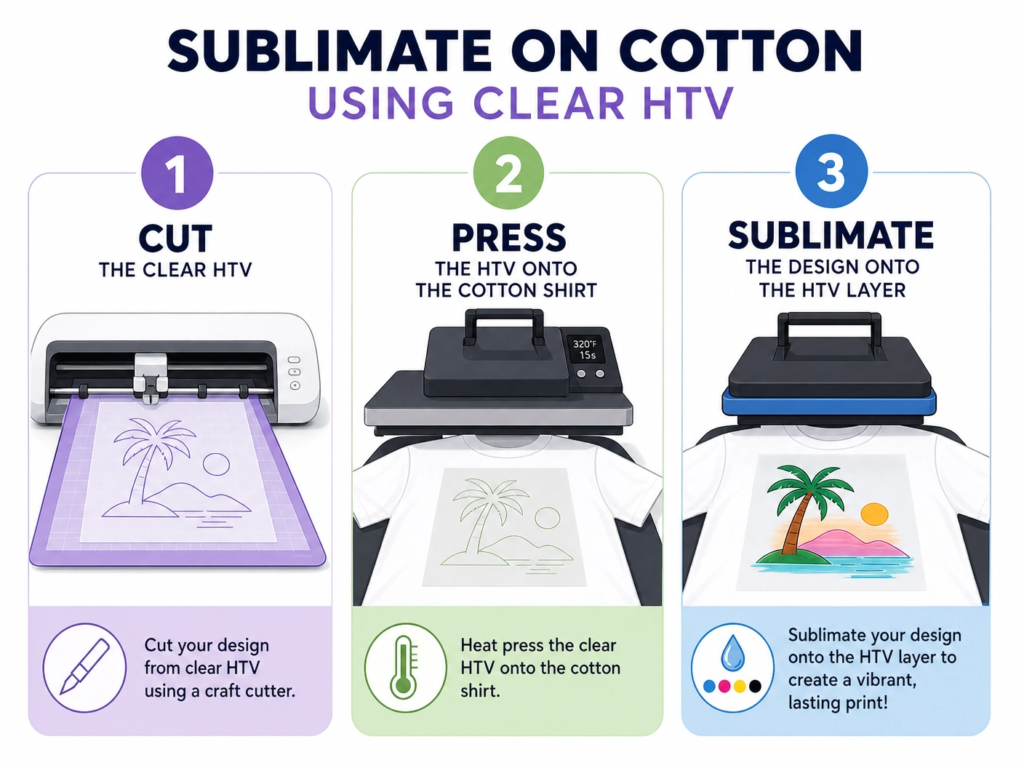
This workaround is gaining significant traction for sublimation on cotton. Instead of spraying a chemical, you first press a layer of clear Heat Transfer Vinyl (HTV) – or a specialized product like Siser EasySubli – onto the cotton shirt. Then, you sublimate your design directly onto that vinyl layer.
Since the HTV is 100% polymer, the sublimation ink bonds to it perfectly, creating a vibrant and durable finish.
The Reality of Clear HTV for Sublimation on Cotton
The colors achieved with clear HTV are explosive! Because you’re sublimating onto a pure, solid polymer base, the vibrancy matches what you’d get on a 100% polyester shirt. This is a huge win for anyone seeking vivid results for sublimation on cotton.
However, there’s a catch: the “hand.” You are, quite literally, melting a sheet of plastic onto a shirt. If your design is a massive 10×10 inch solid square, the front of that shirt will feel like a sweaty piece of cardboard. It won’t breathe, which defeats one of cotton’s primary advantages.
To do this method right, you must use a vinyl cutter (like a Cricut or Silhouette) to contour-cut the clear HTV exactly to the shape of your design. You cannot simply apply a giant square of clear vinyl to a shirt and expect a comfortable, professional result. Precision is key for successful sublimation on cotton with HTV.
The 20-Wash Clear HTV Test Results
We used a standard clear matte HTV, pressed it to a cotton shirt, and then sublimated a contour-cut design over it. The results after 20 wash cycles were impressive:
•Wash 1-3: Perfect. Zero fading, colors remained crisp and vibrant.
•Wash 10: Still incredibly vibrant. The edges of the HTV started to show slight wrinkling if the shirt wasn’t pulled straight out of the dryer, but the design integrity was maintained.
•Wash 20: The colors remained approximately 95% as vibrant as day one. The only issue was minor signs of wear on the vinyl itself, which is typical for any HTV application over extended use.
The Verdict on Clear HTV: This is the undisputed winner for longevity and vibrancy when it comes to sublimation on cotton. If you’re running a business and selling shirts to customers who demand durability and bright, punchy colors, clear HTV is the only workaround you can truly trust. Just remember the importance of contour-cutting for comfort and a professional finish.
What About Sublimation Powder (The DTF Hack)?
You might have seen people on TikTok or crafting forums discussing sublimation powder, often referred to as the DTF (Direct to Film) hack. The process involves printing your design on sublimation paper, sprinkling DTF adhesive powder over the wet ink, melting the powder, and then pressing it to the shirt.
Does it work? Yes, it can. However, it’s incredibly messy – that fine powder gets everywhere! Moreover, if your printer doesn’t lay down enough wet ink, the powder won’t adhere properly, leading to inconsistent results. Honestly, if you’re considering this route for sublimation on cotton, we strongly recommend just ordering custom DTF transfers. They are affordable, reliable, and will save you a significant headache and mess.
Final Verdict: Which Sublimation on Cotton Workaround Wins?
Let’s bottom-line this so you can make the best choice for your crafting needs:
Choose Sublimation Sprays if:
•You are making shirts for yourself, family, or close friends.
•Your design is intentionally meant to look faded, vintage, or distressed.
•You absolutely despise the feel of vinyl on a shirt and prioritize a soft hand above all else.
Choose Clear HTV if:
•You are running a business and selling custom apparel to paying customers.
•You need bright, punchy, and permanent colors that withstand numerous washes.
•You own a cutting machine (like a Cricut or Silhouette) to contour-cut the base layer for a professional, comfortable finish.
Sublimating on 100% cotton will never be as flawlessly simple as sublimating on polyester. You are, after all, forcing two things together that don’t naturally want to mix. But by managing your expectations – and more importantly, your customers’ expectations – these proven workarounds can absolutely open up your inventory to the vast market of cotton-loving masses.
3 Golden Rules for Sublimation on Cotton Workarounds
Before you fire up your heat press, remember these three golden rules we learned the hard way. Following these tips will significantly improve your success rate with sublimation on cotton:
1.Pre-press Aggressively: Cotton holds an insane amount of moisture. This moisture acts like a barrier that vaporizes during pressing, which can cause your ink to blow out or lead to inconsistent transfers. Always pre-press your cotton blank for at least 15 seconds to thoroughly dry the fabric.
2.Lint Roll Twice: A single piece of dark lint on your shirt when you apply clear HTV or spray will be trapped there forever, showing through your design. Lint roll your garment thoroughly, twice, before any application.
3.Use Fresh Butcher Paper: Do not reuse blowout paper when working with these cotton workarounds. Chemical sprays can transfer residue onto your heat press platen, potentially ruining your next project. Always use a fresh sheet of butcher paper or parchment paper for each press.
Stop guessing, start testing, and let us know in the comments which method you prefer for your shop! We’re always eager to hear about your experiences with sublimation on cotton.
Frequently Asked Questions
Can you permanently sublimate on 100% cotton?
Not without a polymer bridge layer. Pure cotton has no
polyester fibers for sublimation ink to bond to. You must
apply a sublimation spray or clear HTV first to create
a polymer surface.
Which lasts longer — sublimation spray or clear HTV on cotton?
In our 20-wash tests, clear HTV consistently outperformed
spray coating for durability. Spray coatings begin fading
around wash 8–10, while clear HTV held vibrancy past wash 20.
Does sublimation on cotton feel different?
Clear HTV adds a slight plastic feel to the print area.
Sublimation spray feels more natural but is less durable.
For premium products you plan to sell, clear HTV gives
more consistent, sellable results.
What is the best sublimation spray for cotton?
DyePress and Poly-T are the most popular options. Apply
2–3 even coats, letting each dry fully before pressing.
Uneven application is the number one cause of patchy results.
References
•Siser EasySubli – Official product page for Siser EasySubli HTV.
•DyePress Sublimation Coating – Example of a sublimation spray product on Amazon.
•What is DTF Transfer? – An informational article explaining Direct to Film transfers.
•Sublimation for Beginners Guide – Comprehensive guide for those new to sublimation.